
Project Team
Jump to: Leadership | Materials Developers | SERC
DAISE Leadership
 Rory McFadden
PI, SERC
Dr. McFadden has experience leading professional development projects and events focused on developing students' quantitative skills and geoscience workforce skills. He is the past president of NAGT. As a faculty member for more than 10 years at primarily undergraduate institutions, he taught undergraduate-level solid Earth courses and led curriculum improvement initiatives.
Project Role: McFadden will be responsible for the overall coordination and organization of the project and will lead the module development workshop, professional development events, and web publishing. He will also work closely with the co-I and module authors on curricular materials, and with the evaluator on the education research.
 Lars Hansen
co-I, University of Minnesota Twin Cities
Dr. Lars Hansen is a Professor of Rock and Mineral Physics at the University of Minnesota Twin Cities. Dr. Hansen's research group focuses on the microphysics that control the macroscopic mechanical behavior of rocks, with particular emphasis on the strength of Earth's lithosphere. His group uses state-of-the-art laboratory experiments and microscopy to understand the relevant processes controlling lithospheric strength and to provide quantitative tools for geoscientists to evaluate the deformation histories of natural rocks. He has also been active in undergraduate education by co-running a Research Experience for Undergraduates on Rock Deformation.
DAISE Materials Developers
Module 1: Lithospheric strength
 Jessica Warren
Associate Professor, University of Delaware
Dr. Jessica Warren is a Professor of Geological Sciences at the University of Delaware and Research Associate at the Smithsonian Institute's National Museum of Natural History. Prof. Jessica Warren's labexamines the processes that drive the formation and evolution of tectonic plates. Areas of research include plate creation by melting and melt extraction, deformation at localized plate boundaries, and modification of plates during collision and volcanism.
 Hannah Tebbens
PhD Student, University of Minnesota Twin Cities
Hannah Tebbens is a Fall '23 entry PhD student in Earth Science at the University of Minnesota Twin Cities. Tebbens' research focuses on using naturally deformed quartzites from Australia to constrain laboratory-derived models for the ductile deformation of quartz. She is a member of Dr. Hansen's lab.
co-I Dr. Hansen will also assist with materials development for this module.
Module 2: Stress and granular materials (tentative)
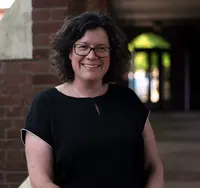 Jacqueline Reber
Professor, Iowa State University
Dr. Jacqueline Reber is a professor in the department of the earth, atmosphere, and climate at Iowa State University. She is a structural geologist interested in the interaction and coexistence of brittle and ductile structures in rocks. To investigate the impact of complex rheologies on the formation of such structures, I am using a combination of physical modeling, numerical modeling, and field work. In her lab, the Structural experiment lab at ISU, she uses a wide variety of analog materials ranging from silicone and sand to polymers to simulate the behavior of rock in different deformation regimes. The lab results are combined with field observations and numerical models to investigate the physical processes leading to stunning and complex deformation patterns in nature.
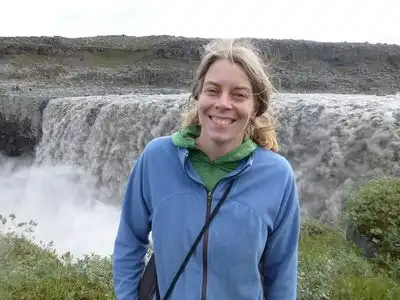 Sarah Titus
Professor and Department Chair, Carleton College
Dr. Sarah Titus is a professor of Geology and Geology Department Chair at Carleton College. Her research broadly focuses on how deformation is accommodated across major strike-slip or transpressional boundaries at a variety of lithospheric levels. She also has a scholarship of teaching project examining students' spatial visualization skills.
Module 3: Frictional experiments and earthquakes (tentative)
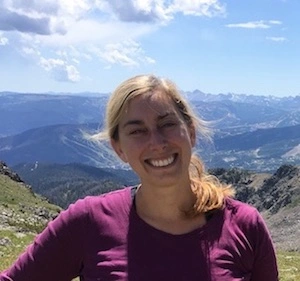 Heather Savage
Professor, University of California — Santa Cruz
Dr. Heather Savage is a professor of earth & planetary sciences at the University of California — Santa Cruz. Her research focuses on earthquakes and faults. Using both laboratory experiments and field studies, she works on questions regarding the strength and stability of faults in order to improve our understanding of when and where larger earthquakes occur. She uses rock deformation and friction experiments at pressures and temperatures relevant to the seismogenic zone to study in situ fault conditions where earthquakes start. Heather uses field observations of fault structure, particularly mapping earthquake slip and damage zones, to provide windows into the processes that occur during earthquakes, such as heat production and chemical reaction, that affect fault zone mechanics. She has worked in a variety of geologic settings, studying faults in California, Nevada, Oklahoma, Alaska, Wyoming, Japan and New Zealand.
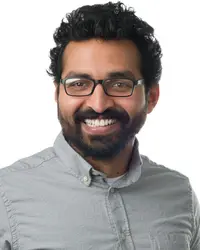 Srisharan Shreedharan
Assistant Professor, Utah State University
Dr. Srisharan Shreedharan is an Assistant Professor of geomechanics and geophysics in the Department of Geosciences at Utah State University. He is broadly interested in faulting, friction and the mechanics of how earthquakes start, propagate and stop, particularly at shallow plate interfaces and in subsurface energy systems. Srisharan uses a combination of friction experiments, ultrasonic monitoring, numerical modeling and machine learning techniques in his research to better understand faulting and friction at multiple scales. Before Utah, he was a Distinguished Postdoctoral Fellow at the University of Texas Institute for Geophysics. Srisharan earned his PhD in Geosciences at Penn State, and an MS in Geological Engineering from the University of Arizona.
SERC
 John McDaris
Science Education Asscoiate, SERC
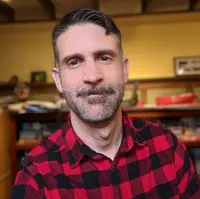
Dr. John McDaris is a Science Education Associate in the Science Education Resource Center of Carleton College. He has over two decades of experience in supporting professional development and pedagogical materials creation. His Master's Degree work involved research in mineral physics and solid state deformation in the Earth's upper mantle.
John will coordinate SERC staff support for elements of back-end website development and permissions, review of modules for accessibility and technical function, and management of workshop logistics and project management such as monitoring deadlines for module authors and implementers.
 Kristin O'Connell
Evaluation & Education Associate, SERC
O'Connell works in higher education to improve teaching practices and student success, drawing on backgrounds in geoscience research (tectonics and geophysics), social science research, and program evaluation. As an evaluator at SERC, O'Connell collaborates with project teams to design inclusive, informative evaluations that examine how and why programs work and identify opportunities for improvement. O'Connell has over a decade of experience evaluating professional development programs, communities of practice, and educational change initiatives.