
SENCER Model Courses
The SENCER models are curricular approaches to improving science learning and supporting engagement with complex issues. Through the "lens" of a matter or set of matters of public consequence, a SENCER model course or program teaches science that is both challenging and rigorous. SENCER models have clear learning outcomes. They seek transparency in their connection of classroom and related activities and the learning that is desired. Outcomes are assessed continuously. SENCER models reflect the intellectual curiosity of the faculty who developed them. At the same time, they respond to student interests, including personal interests, as well as public or civic ones.
View All SENCER Model Courses
SENCER Backgrounders

SENCER Backgrounders are intended to provide intelligent, general readers with high quality syntheses of some of the complex, capacious civic issues that SENCER courses sometimes use to teach basic science. The idea is not to explain the science, but to connect some of what is known, and as yet unknown scientifically, with some of what is at stake civically. A second goal is to identify where scientific knowledge sheds light in such a way as to make civic choices more optimal. Though science is only occasionally the final word on what choice one should make on a complex civic issue, it is worth knowing what science tells us as we deliberate and take into account matters that go beyond science.
Backgrounders cover topics such as synthetic biology, the Human Genome Project, human rights, HIV/AIDS, nanotechnology, and teaching.
View All SENCER Backgrounders
Science Education and Civic Engagement: An International Journal

The Journal explores constructive connections between science education and civic engagement that will enhance both experiences for our students. The Journal focuses on using unsolved, complex civic issues as a framework to develop students’ understanding of the role of scientific knowledge in personal and public decision making, along with examining how such knowledge is embedded in a broader social and political context. In addition to examining what students learn, we also investigate how this learning takes place and how it can be evaluated, documented, and strengthened. By exploring civic questions as unsolved challenges, we seek to empower students as engaged participants in their learning on campus and as citizens in their communities. Since many pressing issues are not constrained by national borders, we encourage perspectives that are international or global in scope.
View Our Journal Archives
Engaging Mathematics Teaching Manuals
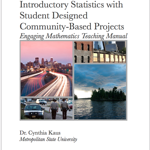
NCSCE's Engaging Mathematics initiative publishes teaching manuals that help instructors teach mathematics through civic issues that students care about. Manuals contain instructor notes discussing best practices for implementing new teaching strategies aligned with civic content, samples of handouts and projects to use in class, and sample rubrics for grading and assessment.
View All Engaging Mathematics Teaching Manuals
Meeting Presentation Slides and Posters

We welcome SENCER Summer Institute, Washington Symposium, and regional meeting participants to share their campus work with meeting participants and online with a wider audience. We sincerely thank the presenters for sharing their materials and expertise with our community. We have a large collection of slideshow presentations on doing the work of SENCER, advancing your career, assessment strategies, and more. We continually update this collection with more materials as we receive them, so check back often!
View All Meeting Presentation Slideshows and Posters