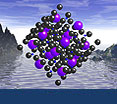
Unknown #10
Download and view the crystal structure data
- Right click on Unknown_10.amc ( 129bytes Dec30 04) to download the crystal structure to your computer. (This file was modified from an AMC file in the American Mineralogist Crystal Structure Database).
- Once the file has downloaded to your computer, click on it to automatically start XtalDraw and open the file for viewing. You should see something like this...
- Try to resist looking at the mineral chemical formula (Edit > Chemical Formula) as this will probably be too big of a hint right off the bat.

Determine the identity of the unknown
Using your knowledge of crystallography and systematic mineralogy, and manipulating the downloaded structure in XtalDraw, answer the following questions to deduce the identity of the unknown. Check your answers by clicking on the "show answer" tabs which appear with each question. Show question #1
 Hide
Hide...so what mineral is this?
